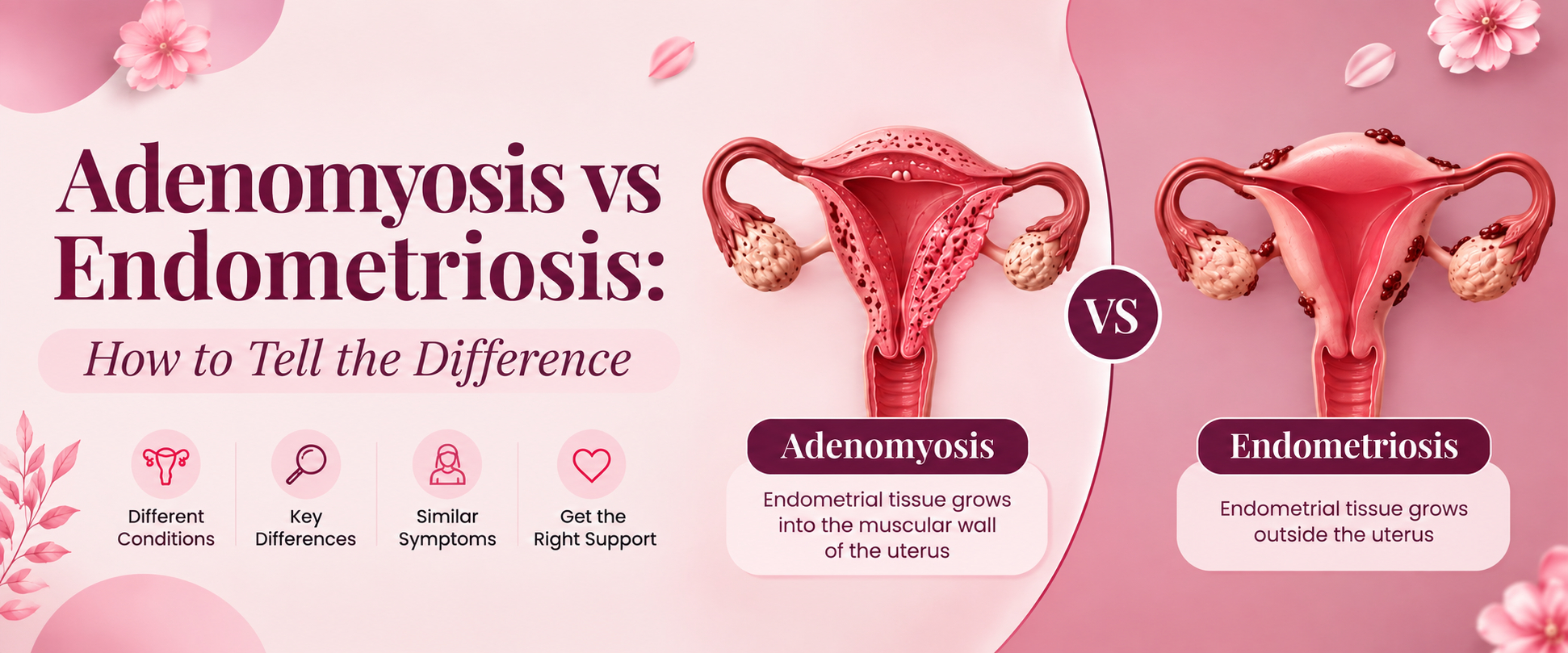
The main difference in adenomyosis vs. endometriosis is location: adenomyosis is tissue growing into the muscular wall of the uterus itself, while endometriosis is tissue growing outside the uterus on organs like the ovaries, bowel, or bladder. Both cause pelvic pain and heavy periods, which is exactly why they’re so often confused with each other, sometimes even by doctors.
What Is the Difference Between Adenomyosis and Endometriosis?
The core difference comes down to where the endometrial-like tissue ends up. Everything else, symptoms, treatment approach, and diagnosis, follows from that one distinction.
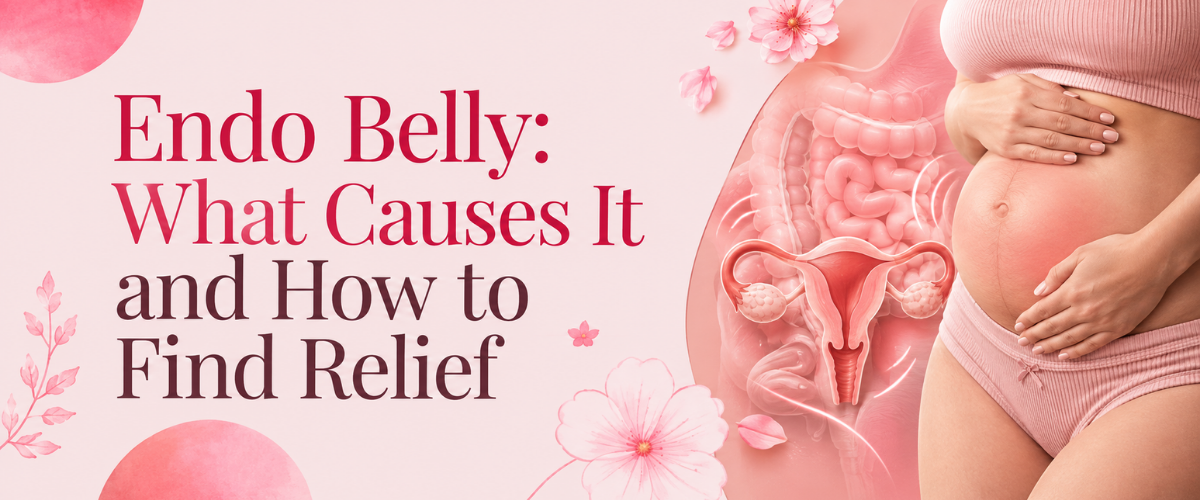
- Adenomyosis: tissue similar to the uterine lining grows into the muscular wall of the uterus, causing it to thicken and enlarge
- Endometriosis: tissue similar to the uterine lining grows outside the uterus, attaching to the ovaries, fallopian tubes, bowel, bladder, or other pelvic structures
- Both types of tissue respond to your hormonal cycle the same way the uterine lining does, thickening and shedding, but neither has anywhere for that blood to properly exit
- This trapped tissue is what drives the pain, inflammation, and swelling associated with both conditions
One way to picture it: adenomyosis is like roots growing deeper into the ground it’s already in, while endometriosis is like vines spreading out beyond the garden bed entirely.
Download MyEndo App and Track Your Symptoms


- 7-day free trial • Cancel anytime
Do Adenomyosis and Endometriosis Have the Same Symptoms?
There’s real overlap here, which is why so many people are misdiagnosed or told to just “wait and see.” But a few differences in pattern and timing can offer clues.
- Shared symptoms: pelvic pain, painful periods, heavy menstrual bleeding, fatigue, pain during sex
- More typical of adenomyosis: an enlarged, tender, or "boggy" uterus; pain that can occur throughout the month, not just around your period; very heavy bleeding with clots
- More typical of endometriosis: pain that's more likely to flare specifically around your period; pain during bowel movements or urination; symptoms that vary depending on where the tissue has attached
- Endometriosis symptoms often build gradually and can be tied to a wider range of triggers, while adenomyosis pain is frequently described as a deep, constant ache or heavy cramping centered in the uterus itself
Because the symptom lists look so similar on paper, the real differences usually only become clear when you track how, when, and where your pain shows up over several weeks.
How Are Adenomyosis and Endometriosis Diagnosed Differently?
Diagnosis is one of the clearest areas of difference between the two conditions, and it’s a big reason why endometriosis in particular takes so long to confirm.
- Adenomyosis is often suspected through pelvic ultrasound or MRI showing a thickened or enlarged uterine wall
- Endometriosis frequently requires laparoscopic surgery for a definitive diagnosis, since implants outside the uterus don't always show up clearly on imaging
- Both conditions are commonly missed or attributed to "normal" period pain before a diagnosis is reached
- It's possible to have both conditions at the same time, which can make symptoms more severe and diagnosis even more complicated
Because imaging and surgery only tell part of the story, many providers also rely heavily on a detailed symptom history, which is often the piece patients struggle most to provide accurately from memory.
Can You Have Both Adenomyosis and Endometriosis at the Same Time?
Yes. These conditions can coexist, and when they do, symptoms are often more intense and harder to untangle from each other.
- Overlapping conditions can mean heavier bleeding, more severe pain, and greater fertility challenges than either condition alone
- Pain from one condition can mask or blend with pain from the other, making it hard to tell what's driving a specific flare
- Providers may need both imaging and a detailed symptom history to understand how much each condition is contributing
- If you already track your endometriosis symptoms, watching for patterns like a persistently enlarged or tender feeling in the lower abdomen can be a useful additional clue to bring up with your doctor
Download MyEndo App to Track Your Symptoms
- 7-day free trial • Cancel anytime
Which Condition Causes More Fertility Issues: Adenomyosis or Endometriosis?
Both conditions can affect fertility, but they tend to do so in different ways and to different degrees.
- Endometriosis is more commonly associated with fertility challenges, since scarring and adhesions can affect the ovaries, fallopian tubes, and egg quality
- Adenomyosis can still make conception more difficult, but its impact on fertility is generally considered less severe than endometriosis
- Heavy menstrual bleeding from either condition can also contribute to fatigue and anemia over time, which affects overall quality of life even outside of fertility concerns
- If fertility is a concern for you, it's worth discussing both conditions with your provider rather than assuming only one is relevant
How Can You Tell Which One You're Dealing With Before Diagnosis?
You can’t self-diagnose either condition, but paying close attention to your pattern of symptoms can help you have a much more productive conversation with your provider.
- Note whether your pain is more constant throughout the month or mostly tied to your period
- Track whether your bleeding has become noticeably heavier or includes more clotting
- Pay attention to whether pain is more centered in the uterus itself versus radiating to the bowel, bladder, or lower back
- Keep a record of how your abdomen feels; a persistently swollen or tender uterus can point toward adenomyosis specifically
- Bring several weeks of this information to your appointment instead of trying to recall it in the moment
This kind of structured tracking is exactly where a dedicated pelvic pain tracker becomes useful; it captures the small details that are easy to lose track of but matter for an accurate diagnosis.
Download MyEndo App and Track What Your Body Is Telling You
- 7-day free trial • Cancel anytime
How Tracking Symptoms Helps You Get the Right Diagnosis
Because adenomyosis and endometriosis look so similar symptom by symptom, the strongest tool you have isn’t a single test; it’s a clear, consistent record of your pattern over time.
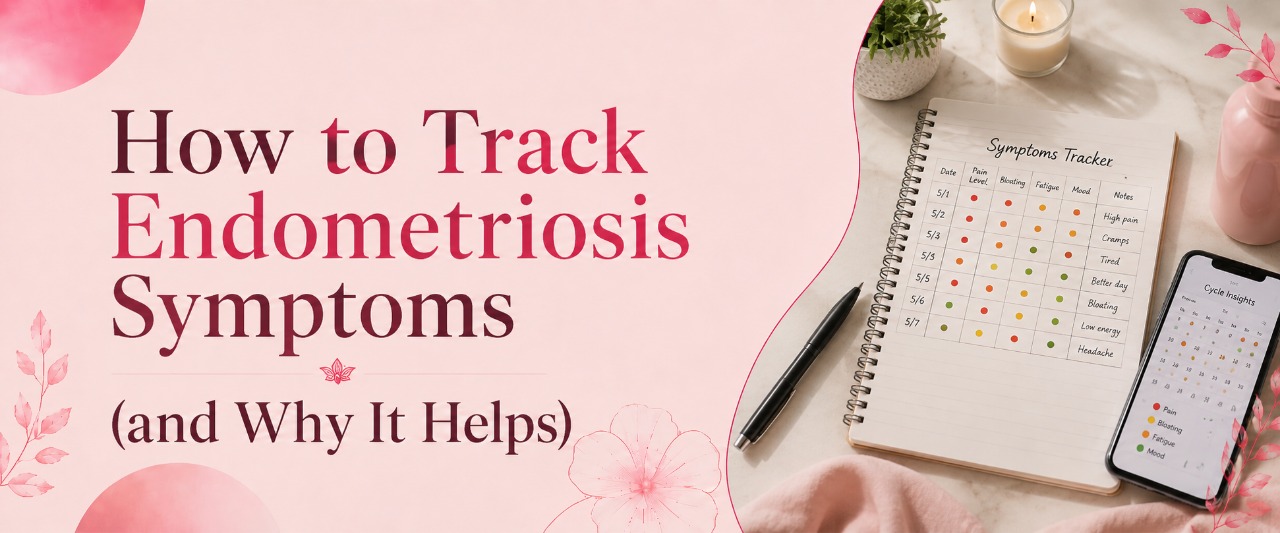
- Logging pain level, location, and timing daily reveals whether symptoms cluster around your period or persist throughout the month
- Recording bleeding heaviness and clotting over several cycles shows whether your periods have genuinely changed
- Noting where pain shows up, the uterus itself, the bowel, the bladder, or radiating to the back, helps differentiate which condition may be driving which symptom
- An endometriosis symptom or adenomyosis symptom tracker turns scattered memories into a pattern your provider can actually use to decide between imaging, further testing, or a treatment trial
How MyEndo Helps You Track and Compare Your Symptoms
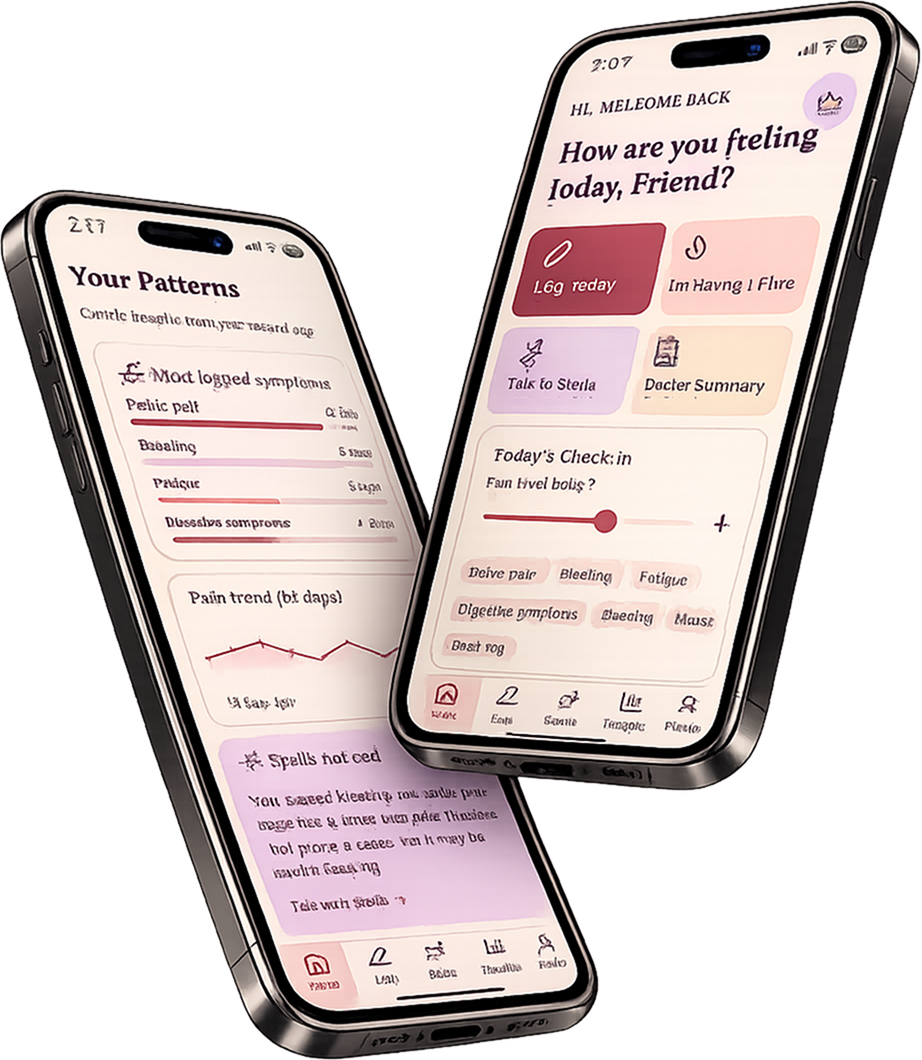
MyEndo was built for exactly this kind of overlap; it doesn’t assume you already have a diagnosis, and it tracks adenomyosis, endometriosis, PCOS, fibroids, IBS, and pelvic floor issues in one place, because these conditions so often share the same symptoms and the same conversation.
- Daily Log, record pain level, location on a body map, bleeding, symptoms, and triggers in under 60 seconds
- Flare Mode, a one-tap option for logging your worst days without needing to write anything out
- Stella AI, an AI companion that reviews your logged data and notices patterns, like whether your pain clusters around your period or shows up all month
- Pattern Insights, see your 14-day pain trend, flare frequency, and most logged symptoms in one dashboard
- Doctor Summary, generate a structured 30-day report with one tap, giving your provider the pattern they need to help tell these conditions apart
You don’t need a diagnosis to start tracking. Many people begin using MyEndo specifically because they’re stuck between “it might be adenomyosis” and “it might be endometriosis,” and structured data is what finally moves that conversation forward.
Frequently Asked Questions
Neither condition is universally more painful; pain severity varies widely by person and doesn’t reliably correlate with which condition, or combination of conditions, someone has.
An enlarged or tender uterus is a common sign of adenomyosis, but it should always be confirmed through imaging and a provider’s evaluation rather than assumed on its own.
Yes. Adenomyosis isn’t classified using the same staging system as endometriosis stages, which can add to the confusion when people try to compare severity between the two conditions.
Heavy menstrual bleeding is more strongly associated with adenomyosis, though it can occur with endometriosis as well, especially if the two conditions coexist.
Tracking doesn’t replace imaging or a clinical exam, but a clear symptom pattern over several weeks gives your provider more to work with than a single appointment’s description ever could.
Conclusion
Understanding the difference between adenomyosis vs. endometriosis starts with recognizing your symptom patterns. While these conditions share many signs, tracking pain, bleeding, and flare timing can provide valuable insights for your provider. Using a structured symptom tracker helps make diagnosis more accurate, supports better treatment decisions, and ensures your concerns are backed by clear, consistent information.
You Don't Have to Guess Which One It Is Alone
Adenomyosis and endometriosis can look nearly identical from the inside, but the details in your pattern, where the pain sits, when it shows up, and how your bleeding has changed, are often the key to telling them apart.
MyEndo gives you a simple way to capture your details every day through an endometriosis symptom tracker, flag your worst moments in seconds, and walk into your next appointment with a 30-day Doctor Summary instead of a guess. Start your free trial today and bring your provider the pattern, not just the pain.