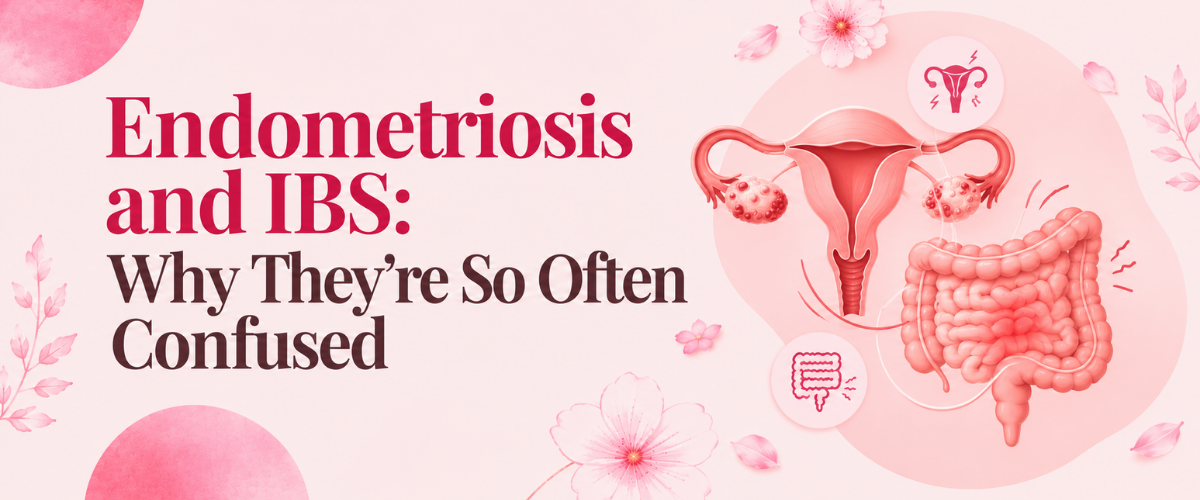
Endometriosis and IBS get confused because they share overlapping symptoms, bloating, pelvic pain, and bowel changes, and because many people actually have both at once. That overlap isn’t a coincidence. It’s a pattern doctors are only now starting to take seriously.
If you’ve ever been told “it’s probably just IBS” after describing pain that felt like way more than a stomach issue, you’re far from alone. Millions of women hear some version of that sentence every year, and for a lot of them, it’s only half the story.
Quick Takeaways
- Endometriosis and IBS share symptoms like bloating, cramping, constipation, and diarrhea, which is why one often gets misdiagnosed as the other.
- Research suggests a real biological overlap, not just coincidence, since inflammation from endometriosis can directly affect gut function.
- Many people are diagnosed with IBS first, sometimes for years, before endometriosis is even considered.
- Cycle timing is one of the biggest clues that separates the two conditions.
- Tracking both bowel symptoms and cycle-linked pain together is the clearest way to spot which one (or both) you're actually dealing with.
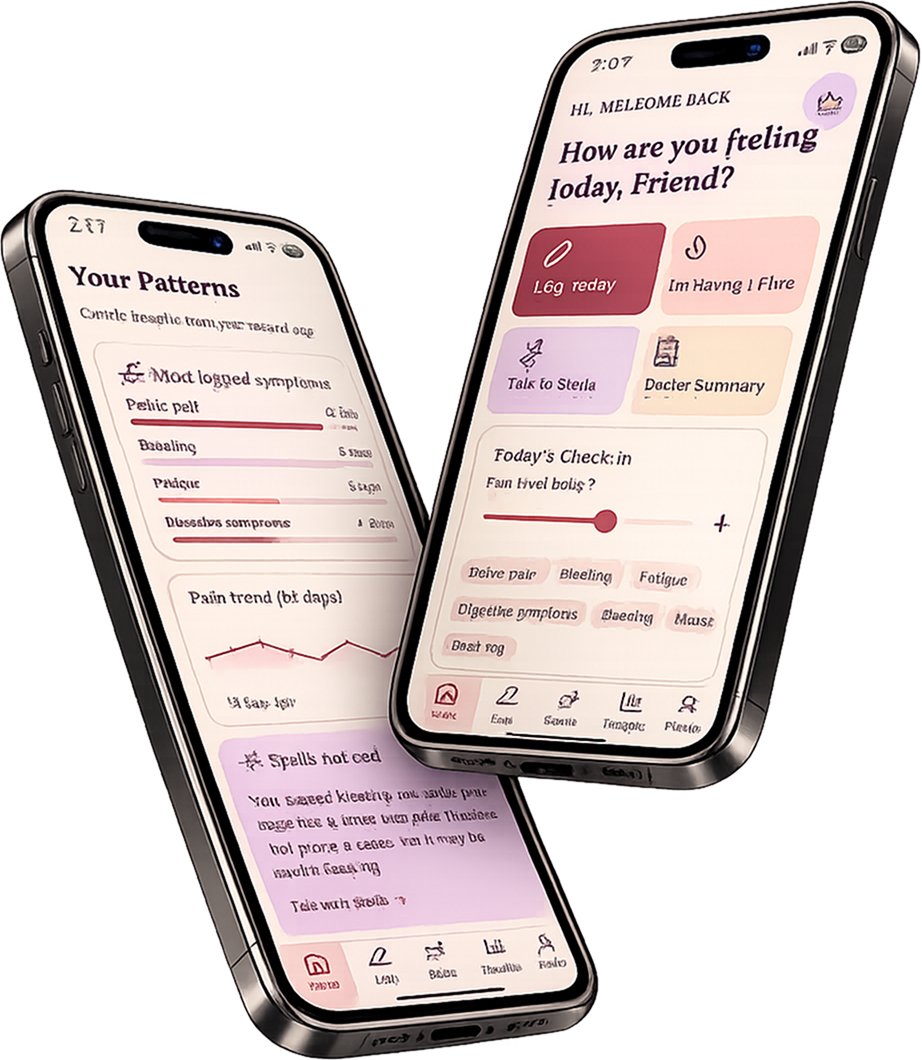
Before we untangle the two, it helps to know what you’re actually working with, because the symptoms overlap enough to fool even experienced doctors. If your bathroom habits and your pelvic pain seem to be talking to each other, an app that works as an IBS symptom tracker alongside your endo symptoms can help you see which one is actually driving the flare.
Download MyEndo App & Start Tracking


- 7-day free trial • Cancel anytime
Picture this. You’re bloated, crampy, and running to the bathroom more than usual. Your gynecologist says it sounds digestive. Your gastroenterologist says it sounds hormonal. Everyone’s half right, and you’re stuck in the middle with no answers.
That back-and-forth happens because endometriosis and IBS genuinely look alike on paper. Both cause abdominal pain. Both mess with bowel habits. Both can flare unpredictably and wreck your week without warning.
The Symptom Checklist Looks Nearly Identical
- Bloating and abdominal distension
- Cramping or sharp abdominal pain
- Constipation, diarrhea, or both
- Nausea during flares
- Fatigue that shows up alongside the pain
Read that list without any other context, and you genuinely can’t tell which condition it belongs to. That’s the core problem. Symptoms alone don’t hand you a diagnosis.
There's a Real Biological Connection, Not Just Bad Luck
This isn’t only about symptoms looking similar on the surface. Research increasingly points to endometriosis and IBS sharing inflammatory pathways in the body. Endometriosis tissue outside the uterus triggers inflammation, and that inflammation doesn’t stay neatly contained to the pelvis.
It can irritate nearby bowel tissue, disrupt normal gut motility, and even sensitize your nervous system to pain signals more broadly. Some studies suggest people with endometriosis are significantly more likely to also meet the criteria for IBS compared to the general population. So when your gut acts up alongside your cycle, it might not be a coincidence at all.
Adhesions Complicate Things Further
Endometriosis can create adhesions, which are bands of scar tissue that bind organs together in ways they’re not supposed to be. When adhesions involve the bowel, they can physically interfere with digestion. That means some of what gets labeled “IBS” might actually be a mechanical issue caused by endometriosis itself.
Why IBS Often Gets Diagnosed First
Here’s where it gets frustrating. IBS is a far more familiar diagnosis to most general practitioners, and it doesn’t require imaging, laparoscopy, or a specialist referral. Endometriosis, on the other hand, often takes years to confirm, partly because it’s frequently only diagnosed through surgery.
So when someone shows up describing bloating and bowel changes, IBS is the quicker, easier box to check. It’s not necessarily wrong. But it can be incomplete, especially if the pelvic pain component gets brushed aside as “just cramps.”
This is part of why the average time to an endometriosis diagnosis stretches to seven to ten years. Symptoms get sorted into whichever category seems most obvious first, and the harder-to-diagnose condition waits its turn.
Download MyEndo App & Start Tracking
- 7-day free trial • Cancel anytime
While the overlap is real, there are a few signals that lean more toward endometriosis than a standalone case of IBS.
- Cycle timing matters. If your gut symptoms consistently worsen around ovulation or your period, that's a strong hint hormones are involved.
- Pain location can differ. Deep pelvic pain, pain during sex, or pain radiating to your lower back points more toward endo than typical IBS.
- Response to treatment varies. Standard IBS treatments that don't move the needle at all might mean something else is driving your symptoms.
- Bleeding patterns count too.> Heavy periods or bleeding between cycles alongside gut symptoms is worth flagging as more than coincidence.
None of these clues are diagnostic on their own. But together, over time, they start painting a picture that’s much harder to dismiss.
Why Endo Belly Fits Into This Puzzle
A lot of the bloating people chalk up to IBS is actually endo belly, the sudden, severe distension specifically tied to endometriosis inflammation and hormonal shifts. It’s one of the clearest overlap points between the two conditions, and honestly, one of the most visible ones. If your stomach balloons out in a way that has nothing to do with what you ate, that’s worth paying attention to separately from your other digestive symptoms.
How Tracking Helps You See What's Really Going On
Memory just isn’t a reliable diagnostic tool. Nobody walks into a doctor’s office able to recall exactly which day the bloating started, whether it lined up with their cycle, or what they ate three flares ago. That’s not a personal failing; it’s just how brains work under stress and pain.
This is where structured logging changes the game. Using an endometriosis symptom tracker that also captures digestive symptoms lets you log pain, bowel changes, cycle day, and triggers all in one place, in under a minute, even on your worst days.
Download MyEndo App & Start Tracking
- 7-day free trial • Cancel anytime
What to Watch Alongside Your Gut Symptoms
- Cycle day and bleeding
- Pain level and location, not just "bad" or "fine"
- Foods that seem connected, especially if you're testing an endometriosis diet
- Bowel changes on the same day as pelvic pain
- What actually eased the flare, even slightly
Turning Your Data Into a Doctor Conversation
Once you’ve got weeks of logged patterns, you’re not walking into an appointment guessing anymore. You’re bringing evidence. That’s really how it works at its core; your logs turn into a structured summary that shows pain trends, flare frequency, and cycle timing side by side, so your doctor sees the connection instead of just hearing about it secondhand.
Endometriosis and IBS being confused for each other isn’t a failure on your part, and it isn’t proof that your symptoms are “all in your head.” It’s a genuine diagnostic challenge, even for good doctors. The more clearly you can track what’s actually happening in your body, the faster you can move past the guessing and toward answers that actually fit.
Frequently Asked Questions
Yes, the two conditions frequently coexist, and having one appears to raise your likelihood of having the other.
No. If endometriosis is the underlying condition, treating IBS won’t make the endometriosis itself go away. IBS treatment may help with digestive symptoms, but it typically won’t resolve endometriosis symptoms.
Symptoms that consistently worsen around ovulation or your period point more toward endometriosis than a standalone gut issue.
No, you can start logging pain, bowel changes, and cycle patterns immediately, with or without a diagnosis.
Conclusion
Endometriosis and IBS overlap so closely that even doctors struggle to separate them. The truth is, your body isn’t confused; the diagnostic process is. By tracking your pain, bowel changes, and cycle together, you start seeing the pattern hiding underneath the guesswork, and that pattern is what finally gets you real answers.
Ready to Find Out What's Really Going On?
Stop guessing whether it’s your gut or your hormones. Download MyEndo, log your first day in under 60 seconds, and start building the pattern that separates endo from IBS; free for 30 days, no credit card required.