If you’ve ever left a doctor’s appointment feeling like you undersold your own pain or forgotten half of what you meant to say the moment you sat down, you’re not alone. Endometriosis symptoms are inconsistent, spread across weeks, and easy to lose track of when you’re just trying to get through the day. This guide walks through exactly how to track endometriosis symptoms, what to track, and why a structured endometriosis symptom tracker makes a bigger difference.
Why Does Tracking Endometriosis Symptoms Actually Matter?
Endometriosis is notoriously difficult to diagnose and manage because so much of the evidence lives in day-to-day experience rather than a single test or scan. Tracking closes that gap by turning your lived experience into something concrete.
- The average time to an endometriosis diagnosis is 7 to 10 years, and vague symptom descriptions are part of why.
- Providers can only act on what they can see, and memory alone rarely holds up under a 15-minute appointment.
- Patterns, not single bad days, are what actually reveal whether treatment is working or symptoms are progressing.
- Tracking helps you notice connections you might otherwise miss, like whether bloating and pain tend to show up together.
Without a record, even the most attentive person ends up relying on a rough impression of “it’s been rough lately,” which rarely moves a conversation forward.
Download MyEndo App and Track Your Symptoms


- 7-day free trial • Cancel anytime
What Should You Actually Track With Endometriosis?
Not all symptoms are equally useful to log, and trying to track everything at once is a fast way to abandon the habit. Focusing on a core set of details gives you the most useful picture with the least effort.
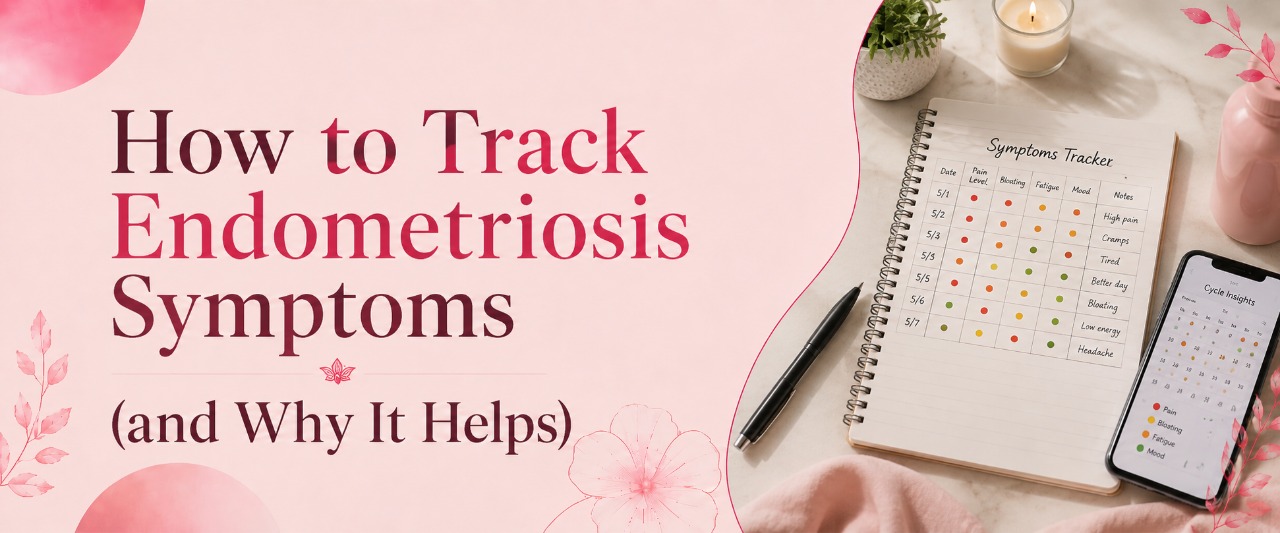
- Pain level on a simple 0–10 scale, logged daily rather than only during flares.
- Pain location, ideally marked on a body map instead of a vague description.
- Bleeding patterns, including heaviness, clotting, and timing relative to your cycle.
- Associated symptoms, such as bloating, fatigue, nausea, bowel changes, or bladder discomfort.
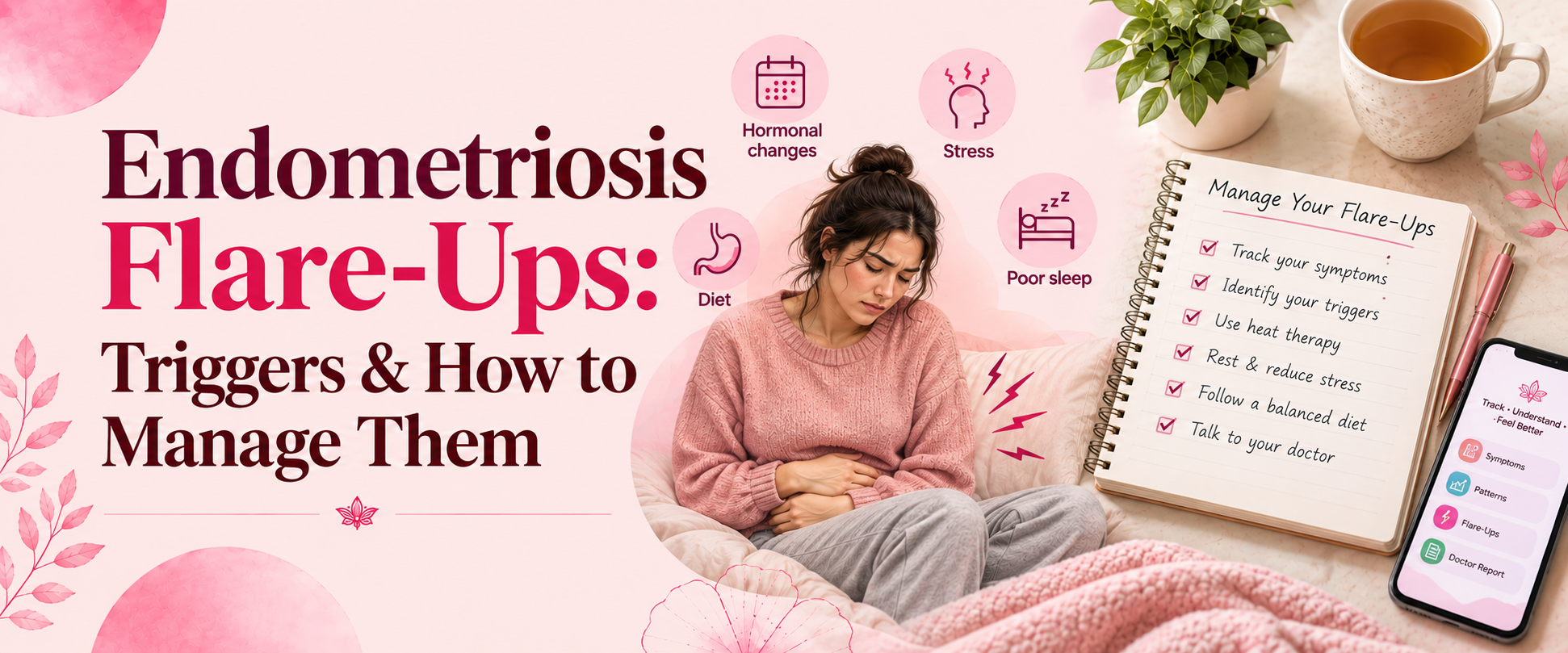
- Triggers, like specific foods, stress, or physical activity that seem to precede a flare.
- What helped, whether that's medication, heat, rest, or a specific position or activity.
Together, these details are what separate general endometriosis symptoms from a pattern specific to your body, and that specificity is exactly what makes tracking useful.
How Often Should You Log Your Symptoms?
- Log daily, even on low-symptom days, so you have a true baseline to compare against.
- Don't skip logging just because a day feels "normal"; normal days matter just as much for spotting patterns.
- Use a fast, simple process so logging doesn't become its own burden during a flare.
- Aim for at least 30 days of consistent logging before drawing conclusions about patterns or treatment effectiveness.
What's the Easiest Way to Track Symptoms Without It Becoming a Chore?
- Use a structured format with taps and scales instead of free-form writing every time.
- Have a simplified "flare mode" option for your worst days, so logging takes seconds, not minutes.
- Choose a system built specifically around pelvic pain and endometriosis, rather than a generic period or fitness app.
- Look for something that organizes your entries automatically, instead of requiring you to review pages of notes later.
Download MyEndo and Track Beyond Your Stage
- 7-day free trial • Cancel anytime
How Do You Turn Tracked Symptoms Into a Productive Doctor's Appointment?
- Bring a summary of your pain trends, not just a list of individual days.
- Highlight any changes in bleeding, frequency of flares, or new symptoms since your last visit.
- Note what treatments or interventions you've tried and whether they helped.
- Ask specific questions based on patterns you've noticed, rather than general statements like "it's been bad."
What Should You Look for in an Endometriosis Tracking App?
- Fast logging that works even on high-pain, low-energy days.
- A body map or similar tool for marking exactly where pain occurs.
- The ability to track co-occurring conditions like PCOS, adenomyosis, fibroids, or IBS in the same place.
- A way to generate a clear summary for appointments, rather than requiring you to export or organize raw data yourself.
- Privacy protections, since symptom and health data are sensitive and shouldn't be sold or shared.
If you’re comparing options, it’s worth looking into some of the best endometriosis apps built specifically for this condition, rather than adapting a general period tracker that wasn’t designed for pelvic pain.
Download MyEndo to Track Your Endometriosis
- 7-day free trial • Cancel anytime
How MyEndo Makes Tracking Endometriosis Symptoms Simple
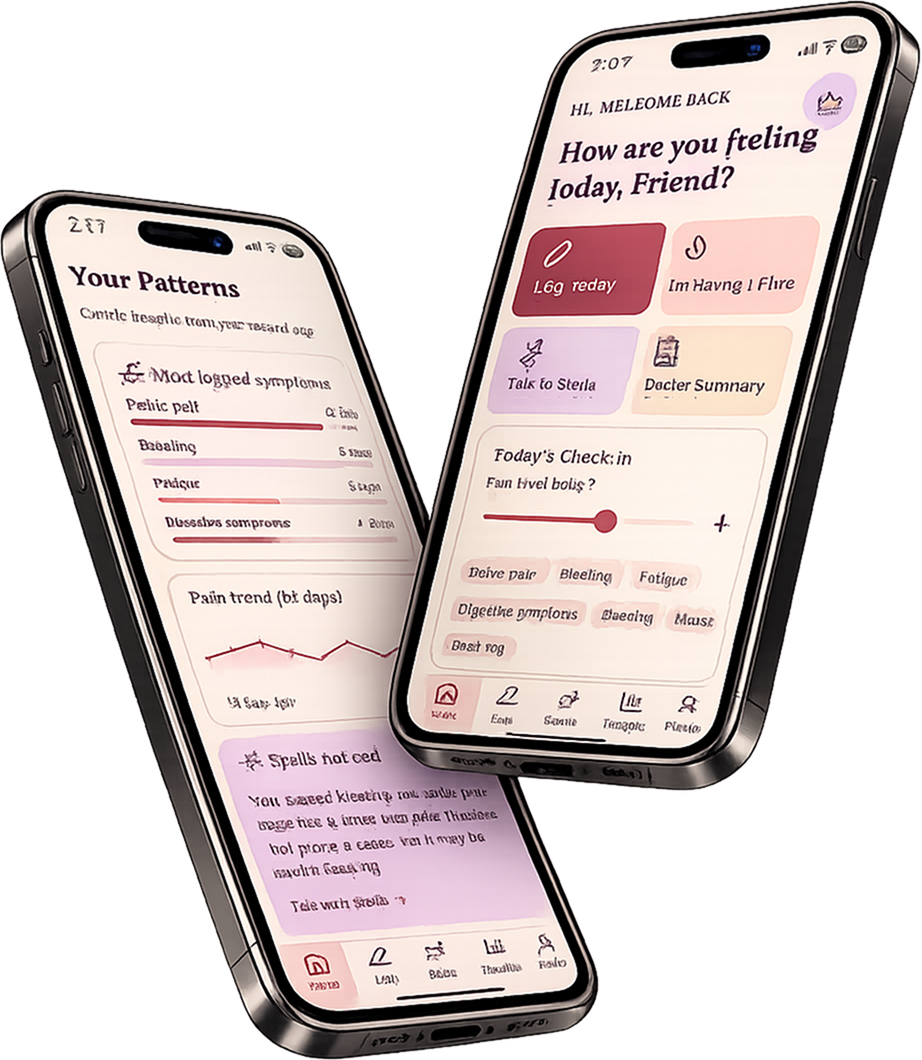
- Daily Log: Record pain level, body map location, bleeding, symptoms, and triggers in under 60 seconds, even on a flare day.
- Flare Mode: A one-tap option for your worst days, so you can log the essentials in seconds and get back to resting.
- Stella AI: An AI companion that reviews your logged data and notices patterns, like recurring symptom combinations you might not have connected yourself.
- Pattern Insights: See your 14-day pain trend, flare frequency, most logged symptoms, and what's actually helped, all in one dashboard.
- Doctor Summary Report: Generate a structured 30-day report with one tap, turning weeks of logging into a single page your provider can act on immediately.
Frequently Asked Questions
Around 30 days of consistent tracking is generally enough to reveal meaningful patterns, though even two to three weeks of daily logging is more useful than relying on memory alone.
No. Many people begin tracking specifically to build the evidence needed to get a diagnosis in the first place, not just to manage one they already have.
Pain is just one piece of the picture. Tracking symptoms also means logging bleeding patterns, bowel or bladder changes, fatigue, and triggers, since endometriosis often affects more than just pain levels.
Yes. Ongoing tracking helps show whether current treatment is working, whether flares are becoming more or less frequent, and whether new symptoms are emerging that need attention.
Not usually. General period trackers aren’t built to capture pain location, flare severity, or co-occurring conditions like adenomyosis or IBS, which are often central to the endometriosis experience.
Conclusion
Your Pattern Is the Proof
MyEndo makes that possible with a Daily Log under 60 seconds, a Flare Mode for your hardest days, Stella AI to help you spot what you might be missing, and a Doctor Summary Report that turns 30 days of tracking into one page your provider can use. Start your free trial today and start building the pattern that finally gets you heard.