How is endometriosis diagnosed? Endometriosis is diagnosed through a combination of your medical history, symptoms, physical examination, imaging tests, and, in some cases, minimally invasive surgery called laparoscopy. While there is no single blood test that can confirm endometriosis, healthcare providers use several tools together to determine whether your symptoms are consistent with the condition.
If you’ve been living with painful periods, chronic pelvic pain, pain during sex, painful bowel movements, or unexplained fertility challenges, you’re probably wondering what comes next. Receiving an endometriosis diagnosis can feel overwhelming, especially since many people wait years before getting answers. Understanding the diagnostic process can help you know what to expect, ask informed questions, and advocate for your health.
This guide explains each step of the diagnostic journey, why diagnosis can sometimes take longer than expected, and how keeping track of your symptoms can support productive conversations with your healthcare provider.
Why Is Diagnosing Endometriosis So Challenging?
Diagnosing endometriosis isn’t always straightforward because its symptoms often overlap with other conditions affecting the reproductive, digestive, and urinary systems. Every person’s experience is different, making it important for healthcare providers to consider the full picture rather than relying on one symptom or one test.
Many patients are told their symptoms are “normal” for years before they receive the right diagnosis. This delay can affect quality of life, emotional well-being, work, school, and relationships.
Some of the reasons a diagnosis may take time include:
- Symptoms vary significantly from person to person.
- Pain severity does not always reflect disease severity.
- Symptoms can mimic conditions such as irritable bowel syndrome (IBS), adenomyosis, pelvic inflammatory disease, or ovarian cysts.
- Imaging tests may not detect every type of endometriosis.
- There is currently no single laboratory test that confirms the condition.
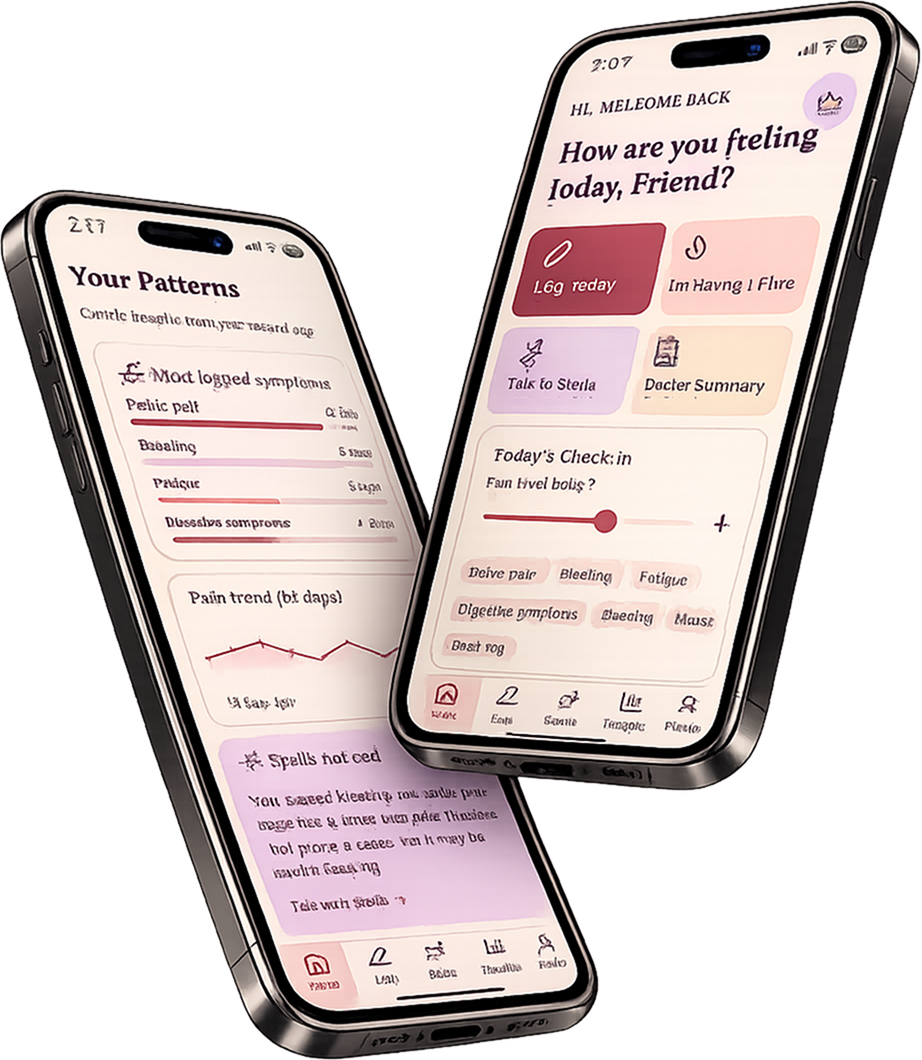
If you’re experiencing persistent pelvic pain or other symptoms, documenting them consistently can make it easier for your healthcare provider to identify patterns. Using an endometriosis symptom tracker before your appointment may help you communicate how your symptoms affect your daily life.
Also read: Why Endometriosis Takes So Long To Diagnose
Start Tracking Symptoms Before Your Next Appointment


- 7-day free trial • Cancel anytime
Step 1: Your Doctor Will Ask About Your Symptoms and Medical History
The first and often most important step in diagnosing endometriosis is having a detailed conversation about your symptoms. Your healthcare provider wants to understand not only what you’re experiencing but also how those symptoms impact your everyday activities.
Being honest and specific during this discussion can help your provider determine whether endometriosis should be considered as part of the diagnostic process.
Your doctor may ask questions such as:
- When did your symptoms first begin?
- Do you experience severe menstrual cramps?
- Is your pelvic pain constant or only during your period?
- Do you have pain during or after sexual intercourse?
- Do bowel movements or urination become painful during menstruation?
- Have you noticed heavy menstrual bleeding?
- Are you trying to conceive?
- Does anyone in your family have endometriosis?
In addition to discussing symptoms, your provider may review:
- Previous surgeries
- Menstrual history
- Pregnancy history
- Fertility history
- Current medications
- Previous imaging results
- Family medical history
Preparing these details before your visit can make the consultation more productive. A doctor’s summary report can help organize your symptom history, previous treatments, and important health information in one place.
Step 2: A Pelvic Examination May Help Identify Signs of Endometriosis
After discussing your symptoms, your healthcare provider may recommend a pelvic examination. Although a pelvic exam cannot diagnose endometriosis on its own, it can provide important clues that guide the next steps.
It’s important to remember that some people with endometriosis have completely normal pelvic exams. A normal exam does not rule out the condition.
During a pelvic examination, your provider may check for:
- Tenderness in specific pelvic areas
- Thickened ligaments behind the uterus
- Reduced movement of pelvic organs
- Ovarian cysts
- Nodules or scar tissue
- Areas that reproduce your pain during the examination
These findings are considered alongside your symptoms and medical history rather than interpreted in isolation.
Step 3: Imaging Tests Can Help Detect Certain Types of Endometriosis
Imaging plays an important role in evaluating patients with suspected endometriosis. While scans cannot detect every lesion, they are valuable for identifying ovarian endometriomas and some forms of deep infiltrating endometriosis.
Your healthcare provider will choose the most appropriate imaging test based on your symptoms and examination findings.
Download the App and Turn Symptoms Into Doctor-Ready Insights
- 7-day free trial • Cancel anytime
Can an Ultrasound Diagnose Endometriosis?
An ultrasound is often the first imaging test ordered because it is widely available, non-invasive, and effective at detecting ovarian endometriomas.
A transvaginal ultrasound may identify:
- Ovarian endometriomas ("chocolate cysts")
- Deep infiltrating endometriosis in some locations
- Adhesions
- Pelvic abnormalities that may explain symptoms
However, ultrasound cannot reliably detect superficial endometriosis, meaning a normal ultrasound does not necessarily mean you do not have the condition.
When Is an MRI Recommended?
An MRI may be recommended when your healthcare provider needs more detailed information, particularly if deep infiltrating endometriosis is suspected or surgery is being considered.
MRI may help evaluate:
- Deep pelvic endometriosis
- Involvement of the bowel
- Bladder involvement
- Complex pelvic anatomy
- Surgical planning
Although MRI provides excellent anatomical detail, it is still one piece of the overall diagnostic process rather than a definitive test.
Can Endometriosis Be Diagnosed Without Surgery?
For many years, laparoscopic surgery was considered the only way to definitively diagnose endometriosis. Today, however, international medical guidelines recognize that many patients can receive a clinical diagnosis based on their symptoms, medical history, physical examination, and imaging findings. This means you may be able to begin discussing treatment options without immediately undergoing surgery.
Your healthcare provider will consider all the information collected during your evaluation before recommending the next step. Surgery is no longer automatically required for every patient, particularly if your symptoms and imaging strongly suggest endometriosis.
When Can Endometriosis Be Diagnosed Clinically?
A clinical diagnosis may be appropriate when several pieces of evidence point toward endometriosis, including:
- A history of chronic pelvic pain or severe menstrual cramps
- Symptoms that worsen during menstruation
- Pain during sex (dyspareunia)
- Pain with bowel movements or urination during your period
- A family history of endometriosis
- Pelvic examination findings suggestive of endometriosis
- Imaging that identifies ovarian endometriomas or deep infiltrating disease
This patient-centered approach can help reduce unnecessary delays in care and allow you to work with your healthcare provider to develop an appropriate management plan sooner.
Step 5: When Is Laparoscopy Needed?
Although many patients can now receive a clinical diagnosis, laparoscopy remains an important diagnostic tool in certain situations. It allows surgeons to look directly inside the pelvis using a small camera and, when appropriate, collect tissue samples for laboratory evaluation.
Laparoscopy is generally considered when the diagnosis remains uncertain or when symptoms persist despite initial treatment.
Your healthcare provider may recommend a laparoscopy if:
- Imaging results are inconclusive
- Your symptoms continue despite treatment
- Another pelvic condition cannot be ruled out
- Fertility concerns require further evaluation
- Surgery is being considered to treat severe symptoms
During laparoscopy, your surgeon may identify:
- Superficial endometriosis lesions
- Deep infiltrating endometriosis
- Ovarian endometriomas
- Scar tissue (adhesions)
- Pelvic inflammation
- Endometriosis affecting nearby organs
Because laparoscopy is a surgical procedure, your healthcare provider will discuss its potential benefits, risks, and whether it is appropriate for your individual situation.
Download the App and Track What Scans Can't Always Show
- 7-day free trial • Cancel anytime
How Can You Prepare for an Endometriosis Appointment?
Preparing for your appointment can help you provide a clear picture of your symptoms and ensure you don’t forget important details during the consultation. Even small pieces of information, such as when your pain occurs or how it affects daily activities, can support the diagnostic process.
Coming prepared also helps you make the most of your time with your healthcare provider.
Before your appointment:
- Track your symptoms for at least one to three menstrual cycles.
- Record when your pain occurs and how severe it feels.
- Note symptoms related to bowel movements, urination, and intercourse.
- List previous medications or treatments you've tried.
- Bring copies of prior imaging reports if available.
- Write down any questions you'd like to ask.
- Document any family history of endometriosis.
Helpful MyEndo resources include:
- Endometriosis Symptom Tracker to monitor patterns over time.
- Doctor Summary Report to organize your medical history and symptoms before your visit.
- How It Works to understand how MyEndo helps patients prepare for more informed healthcare conversations.
Frequently Asked Questions About Endometriosis Diagnosis
The time to diagnosis varies from person to person. Because symptoms often overlap with other conditions and can develop gradually, some individuals experience delays before receiving a diagnosis. Seeking medical evaluation early and tracking your symptoms may help facilitate more informed discussions with your healthcare provider.
No. A normal ultrasound does not rule out endometriosis. While ultrasound is useful for identifying ovarian endometriomas and some forms of deep infiltrating endometriosis, superficial lesions often cannot be detected with imaging alone.
MRI and ultrasound serve different purposes. Ultrasound is usually the first imaging test because it is accessible and effective for many patients. MRI may be recommended when more detailed imaging is needed or when surgery is being planned.
Conclusion
Diagnosing endometriosis involves combining your symptoms, medical history, physical examination, and imaging to build a clear clinical picture. While some people may require laparoscopy, many can now receive a diagnosis without surgery. Tracking your symptoms, preparing for appointments, and seeking timely medical advice can help you take an informed step toward understanding your condition and receiving appropriate care.
Take the Next Step Toward Understanding Your Symptoms
Before your next visit, explore MyEndo’s Endometriosis Symptom Tracker, create your Doctor Summary Report, and learn How It Works to better understand how these tools can help you prepare for conversations about suspected endometriosis.
You can also continue learning by reading our related guide on Endometriosis Symptoms. Download your app today!