You go to the doctor because something doesn’t feel right. You leave with another possible explanation: IBS, painful periods, stress, or “nothing to worry about,” and you’re still searching for answers.
If that sounds familiar, you’re not alone. Undiagnosed endometriosis can be difficult to identify because symptoms vary from person to person, overlap with other conditions, and aren’t always obvious on initial testing.
For some people, getting an answer takes years. ACOG reports that the time from symptom onset to diagnosis can range from four to 11 years.
That’s a long time to live with symptoms without knowing what’s causing them. So why does diagnosis take so long, and what can you do if you suspect endometriosis?
Why Is Endometriosis So Difficult to Diagnose?
There isn’t always one obvious symptom that points directly to endometriosis.
Some people experience severe period pain. Others may have chronic pelvic pain, pain during intercourse, bowel or bladder symptoms, infertility, or several symptoms at once. Some people have few or no obvious symptoms.
That variety can make the condition harder to recognize.
Download MyEndo App & Start Tracking


- 7-day free trial • Cancel anytime
Endometriosis Symptoms Can Look Like Other Conditions
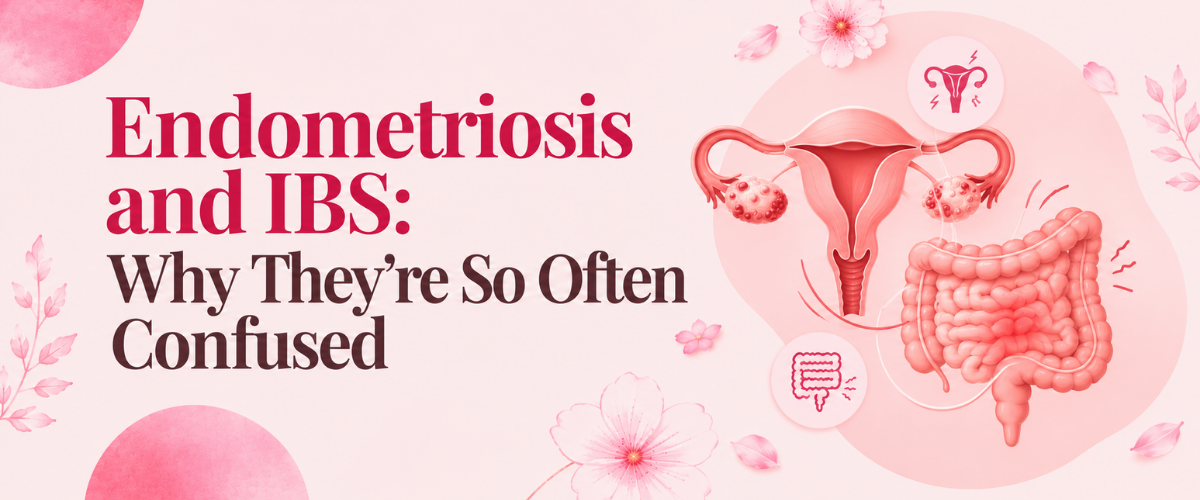
Pelvic pain can have many possible causes. Bloating, constipation, or diarrhea may lead to an evaluation for IBS or another gastrointestinal problem. Urinary discomfort may initially be investigated as a bladder issue.
The problem isn’t that these explanations are necessarily wrong. They can be.
The challenge is seeing the bigger pattern when symptoms are considered separately.
| Symptom | Other possible causes |
|---|---|
| Bloating or bowel changes | IBS and other GI conditions |
| Urinary discomfort | Bladder or urinary conditions |
| Pelvic pain | Gynecological or musculoskeletal conditions |
| Painful periods | Endometriosis, fibroids, and other causes |
These symptoms can have many causes and do not diagnose endometriosis.
Why Can Painful Periods Be Overlooked?
“Everyone gets period pain.”
If you’ve heard that before, you may have learned to push through your endometriosis symptoms instead of asking why they’re happening.
Period pain is common, but severe or disruptive pain deserves attention. ACOG recommends medical evaluation when period pain is severe or when a medical condition such as endometriosis may be causing it.
That doesn’t mean every painful period is endometriosis.
It means pain that repeatedly affects your sleep, work, school, exercise, relationships, or daily life shouldn’t simply be dismissed.
“It’s one thing if your period hurts for a little while, and you can take some Advil and make it feel better. But if you are having to miss school, work, or life activities because of your period or pelvic pain in general, which can happen to lots of women, that’s not normal.”
- Nicole Donnellan, MD, Director, UPMC Endometriosis and Chronic Pelvic Pain Center
Download MyEndo App & Start Tracking
- 7-day free trial • Cancel anytime
Can You Have Endometriosis With Normal Tests?
Ultrasound and MRI can be valuable tools during an endometriosis evaluation. They can help identify certain forms of disease and other pelvic conditions.
But a normal scan doesn’t necessarily mean there is no endometriosis.
Current ESHRE guidance states that negative imaging does not exclude endometriosis, particularly superficial peritoneal disease.
ACOG’s 2026 diagnostic guideline also addresses clinical, imaging, and surgical evaluation rather than relying on a single test.
| Evaluation | What it may help identify | What a normal result may not exclude |
|---|---|---|
| Ultrasound | Endometriomas and some forms of deep disease | Some superficial disease |
| MRI | Certain deep disease and disease mapping | Every form of endometriosis |
| Physical examination | Certain clinical findings | Endometriosis in general |
Your healthcare provider needs to interpret these results alongside your symptoms, medical history, and examination findings.
How Endometriosis Is Diagnosed
If you’re searching for how endometriosis is diagnosed, there isn’t one test that answers the question for everyone.
Current ACOG guidance includes clinical, imaging, and surgical evaluation in the diagnostic process.
Medical and Symptom History
Your healthcare provider may ask about:
- Your menstrual cycle.
- Pain and where it occurs.
- Bowel and bladder symptoms.
- Pain during sex.
- Fertility.
- Previous treatments.
- How symptoms affect daily life.
Timing can matter, too.
A symptom that repeatedly appears around your period may provide useful context when considered alongside your other symptoms.
Physical Examination
A pelvic examination may identify findings that support suspected endometriosis or point toward another condition.
A normal examination does not automatically answer every question.
Ultrasound or MRI
Imaging may help identify certain forms of endometriosis and other pelvic conditions.
The important distinction is that imaging can provide useful information without necessarily excluding every type of disease.
Laparoscopy
Laparoscopy is a minimally invasive surgical procedure that allows a surgeon to examine the pelvis and, when appropriate, obtain tissue for examination.
Surgery isn’t automatically the first step for everyone.
ACOG’s 2026 guidance supports a presumptive clinical diagnosis based on history, symptoms, and physical examination findings in appropriate patients, alongside imaging and shared decision-making about treatment and further evaluation.
Download MyEndo App & Start Tracking
- 7-day free trial • Cancel anytime
What Happens When Endometriosis Goes Undiagnosed?
Diagnostic delays rarely come down to one thing.
They can involve:
- Symptoms being normalized as typical period pain.
- Symptoms resembling other conditions.
- Different symptoms being discussed separately.
- Symptoms changing throughout the menstrual cycle.
- Imaging not identifying every form of disease.
- Limited access to specialist care.
- Difficulty describing months of symptoms from memory.
The Bigger Problem: The Pattern Can Get Lost
Imagine trying to explain six weeks of symptoms from memory.
You remember Tuesday because the pain was awful. You forget that similar pain appeared around your period last month. You remember the bloating but not whether it happened alongside the pelvic pain.
That’s not a failure of memory.
It’s what happens when you’re asked to summarize weeks of changing symptoms in a short appointment.
What Should You Do If You Suspect Undiagnosed Endometriosis?
You don’t need to diagnose yourself before seeing a doctor. Start by documenting what you’re experiencing.
Start With the Pattern
Track:
- When symptoms happen
- Where you feel pain
- Pain severity
- Cycle timing
- Bowel or bladder symptoms
- Pain during sex
- Flares and their duration
- What seems to help or worsen symptoms
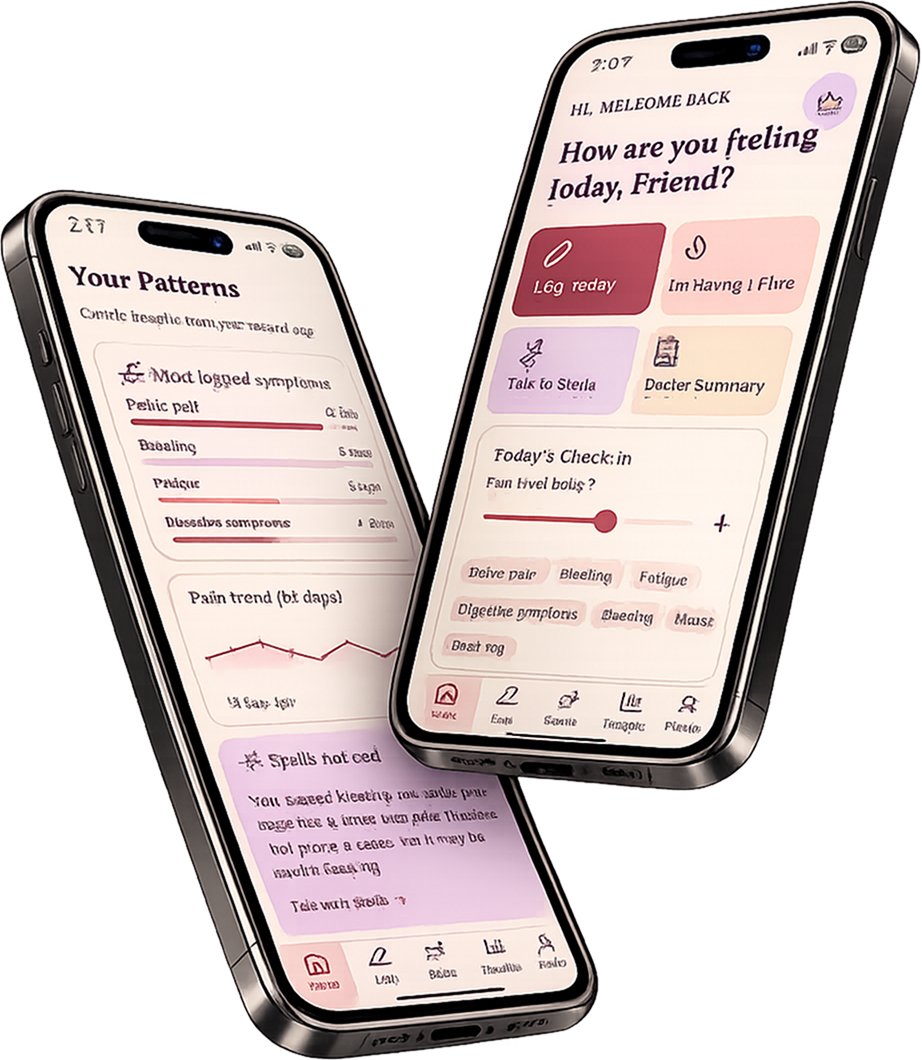
MyEndo’s tracker currently includes pain scoring, body-map location, symptoms, triggers, interventions, and flare logging. If you are still wondering how it works, do not worry; we are here to help you.
Build Your Evidence
Symptom tracking isn’t a diagnostic test. It can’t tell you whether you have endometriosis.
What it can do is give you a more organized record of what you’ve experienced.
ESHRE guidance recognizes symptom diaries and apps as potentially useful for complementing traditional history-taking, while not establishing that tracking itself reduces diagnostic time.
Not Sure Where to Start Tracking? You don’t need an endometriosis diagnosis to start documenting your symptoms. MyEndo gives you a simple place to record pain, symptoms, flares, and patterns over time.
Make Your Next Doctor's Appointment More Useful
A symptom record isn’t there to prove that you have endometriosis. It’s there to make your experience easier to explain.
For example, you may notice that pelvic pain repeatedly increases around your period, bowel symptoms appear at the same time, or certain flares last several days.
MyEndo can turn logged information into a structured doctor summary report, including pain patterns, flare frequency, symptom frequency, and cycle timing.
Turn Your Symptom History Into a Doctor Summary. Instead of trying to remember weeks of symptoms during a short appointment, you can use your tracking history to create a structured summary.
- See How the Doctor Summary Works
What If Your Tests Are Normal?
A normal result can be reassuring, but it doesn’t necessarily answer every question. Ask what the test evaluated and what it may not have been able to detect.
If symptoms continue, continue documenting them and talk to your doctor about endometriosis or other possible causes. Your clinician can determine whether further evaluation, treatment, referral, or monitoring is appropriate.
Build Your Symptom History Before Your Next Appointment
When you’re looking for answers, the hardest part isn’t always remembering that you’re in pain.
It’s remembering when it happened, how severe it was, what happened alongside it, and whether you’ve experienced the same pattern before.
MyEndo lets you record those details over time and turn your tracking history into a structured Doctor Summary. You don’t need a formal diagnosis to start using the app.
Start Building Your Symptom History Today. Your next appointment doesn’t have to start with a blank page. Track your symptoms, build your evidence, and turn your tracking history into a structured Doctor Summary you can take to your next appointment.
- MyEndo is a symptom-tracking and education tool, not a diagnostic tool or substitute for medical care.
Frequently Asked Questions
Diagnostic delays can happen because symptoms vary, overlap with other conditions, may be normalized or misattributed, and because access to appropriate evaluation can vary. ACOG reports that people may wait four to 11 years from symptom onset to diagnosis.
Possible symptoms include chronic pelvic pain, painful periods, pain during sex, painful bowel movements, urinary pain, and fertility problems. Symptoms vary widely, and having one or more of them does not mean you have endometriosis.
Yes. Ultrasound can identify some forms of endometriosis, but negative imaging does not necessarily exclude all endometriosis.
No. Symptom tracking cannot diagnose endometriosis. It can help organize information about symptom timing, severity, and patterns so you can communicate your experience more clearly to your healthcare provider.
Yes. MyEndo states that you don’t need a formal diagnosis to begin tracking. Its symptom tracker is designed to record symptoms and patterns and can generate a Doctor Summary for appointments.
Final Thoughts: Your Symptoms Deserve a Clear Record
Undiagnosed endometriosis can be difficult to identify because there isn’t one predictable symptom pattern or one test that catches every case.
Symptoms can overlap with other conditions. Pain may be normalized. Imaging has limitations. And explaining months of symptoms from memory isn’t easy.
If you’re still looking for answers, you don’t need to diagnose yourself.
Start with what you know. Track what you’re experiencing. Look for recurring patterns. Bring that information to your healthcare provider and ask what should happen next.
A clearer record won’t replace medical care, but it can give you a better starting point for the conversation. Download MyEndo today!