The best way to talk to your doctor about endometriosis is to walk in with specific, tracked symptoms, pain levels, cycle timing, and patterns over weeks, instead of a vague description of “bad periods.” Specifics are hard to dismiss. Vague complaints are easy to brush off, even by well-meaning doctors.
You know the feeling. You’ve rehearsed what you’re going to say in the waiting room a dozen times, and then the appointment starts, and somehow it all comes out as “my periods are just really painful.” Ten minutes later you’re walking out with a shrug and a suggestion to try more ibuprofen.
Quick Takeaways
- Vague descriptions of pain get dismissed far more easily than specific, tracked patterns.
- Bringing written or app-based data changes how seriously doctors take your symptoms.
- Certain phrases and details carry more diagnostic weight than others, and most people don't know which ones.
- Preparing for pushback ahead of time makes it easier to advocate for yourself in the moment.
- The right prep can shorten the path to answers instead of adding to the years-long average wait.
Before we get into exactly what to say, it helps to understand why so many appointments go nowhere in the first place, because once you see the pattern, you can prepare around it. If you’ve never used an endometriosis symptom tracker, that’s usually step one, since it turns “it hurts a lot” into something a doctor can actually work with.
Download MyEndo App & Start Tracking


- 7-day free trial • Cancel anytime
Why So Many Endometriosis Conversations Go Wrong
Here’s an uncomfortable truth. Doctors see dozens of patients a day, and most period pain complaints sound similar on the surface. “It hurts” doesn’t separate you from the next patient. “It hurts” doesn’t tell them where, how often, or how bad.
That’s not doctors being careless. It’s just how a short appointment window works. Vague symptoms get vague responses, and vague responses are one reason why endometriosis takes so long to diagnose in the first place.
The Diagnosis Delay Isn't Just Bad Luck
What to Say Instead of "It Really Hurts"
Swapping vague language for specific language is genuinely one of the highest-leverage things you can do before an appointment. Here’s what that shift looks like in practice.
- Instead of "bad cramps," say "pain that's a 7 or 8 out of 10, starting two days before my period."
- Instead of "I feel bloated sometimes," say, "My abdomen visibly distends, usually mid-cycle, and doesn't go down with normal remedies."
- Instead of "sex is uncomfortable," say "I have sharp pain during deep penetration, specifically."
- Instead of "my periods are heavy," say "I'm soaking through a pad or tampon in under two hours on my heaviest days."
Notice the pattern. Numbers, timing, and specific triggers replace general impressions. That’s the language doctors are trained to act on.
Bring Data, Not Just Memory
Nobody remembers exactly how bad last month’s pain was, or which day it started, or whether it lined up with a specific food or activity. That’s not a flaw in you. It’s just how memory works under stress, especially chronic, recurring stress.
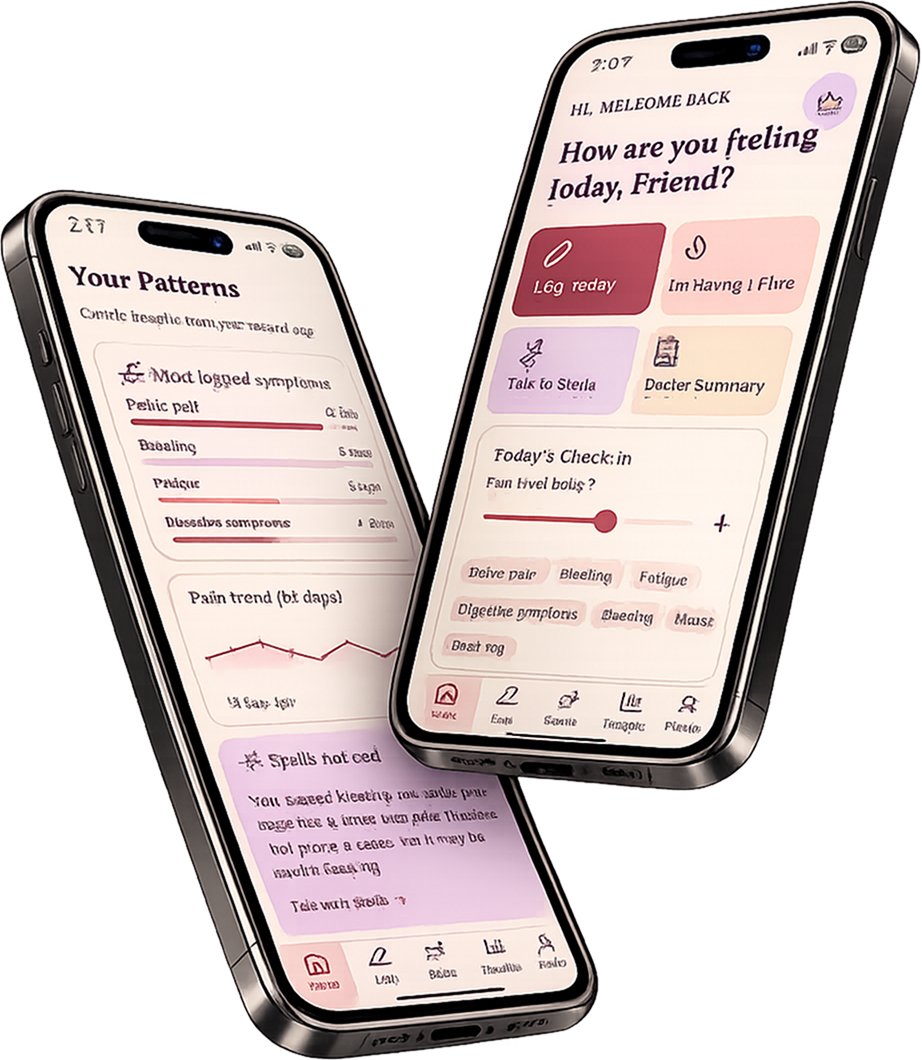
This is exactly why learning how to track endometriosis symptoms can matter more than it sounds like it should. An endometriosis symptom tracker lets you record pain, bloating, bleeding, and flares in under a minute a day, so by the time your appointment rolls around, you’re not reconstructing the last few months from memory. You’re just handing over what actually happened.
What's Worth Tracking Before You Talk to a Doctor
- Pain level and location, logged consistently, not just on the worst days
- Cycle day, bleeding, and how heavy it was
- Bloating and bowel changes, especially if they cluster around your cycle
- Flares, including what triggered them and how long they lasted
- What treatments or remedies you already tried, and whether they helped
Download MyEndo App & Start Tracking
- 7-day free trial • Cancel anytime
Here’s where tracking earns its keep. A pile of daily logs isn’t useful in an appointment room by itself. What’s useful is a summary that shows the pattern at a glance.
That’s really how it works: your logged days get organized into a structured doctor summary report that shows pain trends, flare frequency, and cycle timing side by side. Instead of trying to summarize three months of symptoms in the first ninety seconds of a rushed appointment, you hand over something a doctor can actually read at a glance.
Doctors respond to patterns they can see, not stories they have to reconstruct. A clean summary does the reconstructing for them.
What to Actually Bring to the Appointment
- A printed or digital symptom summary covering at least four to six weeks
- A short list of your top three most disruptive symptoms, ranked by severity
- Any family history of endometriosis, since it does run in families
- A specific ask, like "I'd like to discuss whether this could be endometriosis" or "can we talk about imaging or a referral"
- A backup plan if you get dismissed, like requesting a second opinion or a specialist referral
That last one matters more than people expect. Walking in with a plan for pushback means you’re not caught off guard if the first response isn’t what you hoped for.
How to Push Back (Respectfully) If You Feel Dismissed
It happens more than it should. You bring your data, you describe your symptoms clearly, and you still get a version of “that sounds normal” or “try birth control and see if it helps.” You’re allowed to ask follow-up questions.
Try something like, “I understand that’s an option, but given how disruptive this has been, can we also discuss what how endometriosis is diagnosed would look like for me specifically?” That single sentence does two things. It acknowledges their suggestion without accepting it as the final word, and it names the next concrete step you want considered.
If that still goes nowhere, it’s completely reasonable to ask for a referral to a gynecologist who specializes in endometriosis or to seek a second opinion elsewhere. You’re not being difficult. You’re being thorough about your own care.
Download MyEndo App & Start Tracking
- 7-day free trial • Cancel anytime
Preparing for the Follow-Up, Not Just the First Visit
One appointment rarely settles everything, and that’s normal, not a failure. The real advantage of tracking is that it doesn’t stop after one visit. You keep logging, the pattern keeps sharpening, and your next conversation starts from a stronger position than the last one.
Over a few months, that consistent record is often what finally moves things from “let’s watch and see” to actual imaging, a specialist referral, or a real diagnostic plan. Patience paired with data tends to outperform patience alone.
Frequently Asked Questions
A specific, dated log of your pain and symptoms over several weeks carries more weight than any verbal description alone.
If your symptoms are significantly disrupting your life and initial treatments haven’t helped, it’s reasonable to ask for a specialist referral early rather than waiting through multiple rounds of trial and error.
You can ask directly what would rule endometriosis in or out and request that it be documented in your chart even if it isn’t pursued immediately.
Four to six weeks of consistent logging usually gives enough pattern data to make your appointment meaningfully more productive.
Conclusion
Getting heard by a doctor isn’t about being louder. It’s about being specific. When you swap vague descriptions for tracked patterns, you hand your doctor something they can actually act on, instead of something easy to explain away. That shift alone can move you months, sometimes years, closer to real answers.
Ready to Walk Into Your Next Appointment Prepared?
Stop trying to remember three months of symptoms from memory. Download MyEndo, start logging in under 60 seconds a day, and generate a doctor-ready summary before your next visit, free for 30 days, with no credit card required.